

Conversion rate is a vital metric in marketing that measures the percentage of potential clients who complete a desired action, such as submitting a contact form, booking a consultation, or signing a contract. For architecture firms, conversion rate plays a central role in assessing the effectiveness of marketing campaigns, website performance, and sales strategies. By understanding and optimizing conversion rates, architecture firms can attract more clients, reduce customer acquisition costs, and increase overall profitability. This article will delve into what conversion rate is, why it’s important, how to calculate it, and strategies to improve it for architecture firms.
Table of Contents
- Understanding Conversion Rate
- Importance of Conversion Rate in Architecture Firms
- Factors Affecting Conversion Rate in Architecture Firms
- How to Calculate Conversion Rate
- Strategies to Improve Conversion Rate
- Measuring and Tracking Conversion Rate Over Time
- Conclusion
1. Understanding Conversion Rate
Conversion rate refers to the percentage of website visitors or leads who take a specific desired action. In marketing for architecture firms, these actions may vary depending on business goals and can include:
- Submitting a contact or inquiry form
- Booking a consultation or meeting
- Downloading a portfolio or brochure
- Signing up for a newsletter
- Agreeing to a project proposal
Each of these actions represents a step in the client acquisition process. A high conversion rate indicates that marketing efforts are effectively persuading potential clients to engage with the firm.
2. Importance of Conversion Rate in Architecture Firms
Conversion rate is an essential metric for architecture firms for several reasons:
- Assessing Marketing Effectiveness: Conversion rate provides insights into which marketing channels (social media, website, email campaigns) are most effective at generating leads.
- Optimizing Client Acquisition Costs (CAC): By improving conversion rates, firms can lower their customer acquisition costs, as fewer resources are needed to convert a potential client.
- Maximizing Return on Investment (ROI): Higher conversion rates lead to better ROI on marketing efforts. By converting a larger portion of visitors into clients, firms can justify their marketing expenses.
- Increasing Revenue: Higher conversion rates directly impact revenue generation, as more clients engage with the firm’s services and projects.
3. Factors Affecting Conversion Rate in Architecture Firms
Several factors influence conversion rates for architecture firms:
3.1 Website Design and User Experience (UX)
An easy-to-navigate, visually appealing website is crucial for high conversion rates. Potential clients may abandon the site if it is difficult to use or doesn’t clearly present information, affecting conversions.
3.2 Quality of Content
The content on an architecture firm’s website (such as portfolios, project case studies, and blogs) should be engaging, informative, and visually appealing. High-quality content builds credibility and encourages visitors to take action.
3.3 Call-to-Action (CTA) Placement
Strategically placed CTAs, such as “Book a Consultation” or “Request a Quote,” make it easier for visitors to take the next step. CTAs should be prominent, clear, and aligned with the website’s overall design.
3.4 Client Trust and Social Proof
Testimonials, client reviews, and case studies help establish credibility. Potential clients are more likely to take action if they trust the firm and see evidence of past success.
3.5 Targeted Marketing Channels
Using the right marketing channels to attract qualified leads can improve conversion rates. For instance, promoting projects on visual platforms like Instagram may be more effective for residential projects, while LinkedIn may work better for commercial architecture.
4. How to Calculate Conversion Rate
To calculate the conversion rate, use the following formula:

For example, if an architecture firm’s website receives 1,000 visitors in a month, and 50 visitors submit a contact form, the conversion rate would be:
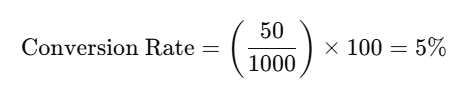
This means that 5% of website visitors completed the desired action.
5. Strategies to Improve Conversion Rate
Improving conversion rates involves a combination of tactics focused on website optimization, content creation, and user experience. Here are some strategies that architecture firms can use to increase their conversion rates:
5.1 Optimize Website User Experience
A seamless and intuitive user experience encourages visitors to explore the website and take action. Ensure the website is mobile-friendly, loads quickly, and is easy to navigate. Simplify navigation to guide users toward CTAs, such as contact forms or project pages.
5.2 Use Strong, Clear Calls-to-Action (CTAs)
CTAs should be placed in visible areas throughout the website, especially on key pages such as portfolios, project case studies, and the homepage. The CTA text should be clear, action-oriented, and relevant to the page it’s on.
5.3 Showcase Client Testimonials and Case Studies
Displaying testimonials and case studies builds trust and credibility. Prospective clients are more likely to convert when they see evidence of successful projects and satisfied clients.
5.4 Provide High-Quality Visual Content
Since architecture is a visual field, high-quality images, renderings, and videos can significantly impact conversion rates. Showcasing impressive project portfolios, 3D renderings, and even virtual tours can engage visitors and encourage them to reach out.
5.5 Optimize for SEO to Attract Qualified Leads
Investing in search engine optimization (SEO) helps ensure the website attracts the right audience. Targeting relevant keywords, such as “residential architecture firm” or “commercial building design,” can attract visitors who are actively searching for architectural services.
5.6 Use Retargeting Ads
Retargeting ads allow architecture firms to reach visitors who previously visited the site but did not take action. These ads can remind potential clients of the firm and encourage them to return and convert.
5.7 Create Valuable Content Offers
Providing valuable content, such as downloadable guides, project checklists, or eBooks, can incentivize visitors to provide their contact information. This tactic can be particularly effective for lead generation and can lead to higher conversion rates.
5.8 Conduct A/B Testing
A/B testing allows firms to experiment with different versions of web pages, CTAs, and content to see which performs best. Testing variations can reveal which elements drive higher conversions and enable firms to refine their approach.
5.9 Offer Free Consultations
Offering free initial consultations can be a strong incentive for potential clients to reach out. Architecture firms can showcase their expertise and build trust, making it more likely that prospects will commit to working with them.
6. Measuring and Tracking Conversion Rate Over Time
Regularly tracking conversion rates allows architecture firms to monitor the success of their marketing efforts and make data-driven adjustments. Tools like Google Analytics can track conversion rates and provide insights into user behavior, traffic sources, and conversion paths.
Key Metrics to Monitor
- Traffic Source Conversion Rates: Track which channels (organic, paid, social media) yield the highest conversion rates.
- Page Conversion Rates: Identify which pages have the highest and lowest conversion rates to focus optimization efforts.
- Device Conversion Rates: Ensure the website is optimized for both desktop and mobile visitors.
7. Conclusion
Conversion rate is a fundamental metric for architecture firms that want to assess the effectiveness of their marketing strategies, optimize client acquisition efforts, and maximize ROI. By understanding and improving conversion rates, architecture firms can more effectively turn website visitors and leads into loyal clients, thereby boosting revenue and long-term success.
Investing in high-quality content, optimizing the website experience, using targeted marketing channels, and showcasing credibility through testimonials and case studies are all strategies that can significantly increase conversion rates. By focusing on the factors that influence conversions and continuously monitoring results, architecture firms can develop a strong online presence that attracts and converts high-quality leads.
